
PFAS-free coatings are no longer optional—they're the future. With EU restrictions advancing and major suppliers already reformulating, this article breaks down what's at stake for coating additives and how manufacturers can prepare before the rules take effect.

Proposed EU PFAS restrictions are accelerating the shift to PFAS-free coating additives.
The transition to PFAS-free coatings is already reshaping the market. With EPA reporting requirements under review and proposed EU restrictions covering more than 10,000 PFAS substances, manufacturers need to examine the alternatives. While the European Union’s proposal is still going through the regulatory process, the coatings industry is responding. Raw material suppliers are reformulating product portfolios while manufacturers reassess formulations, and sourcing strategies are evolving ahead of the final legislation.
For formulators, compliance is only part of the challenge. PFAS chemistry can provide water and stain resistance, durability, and other surface properties. Replacing it means assessing alternative coating additives and their effect on the formulation as a whole. It may also require changes to other coating materials. This article looks at the proposed rules and the steps manufacturers can take now.
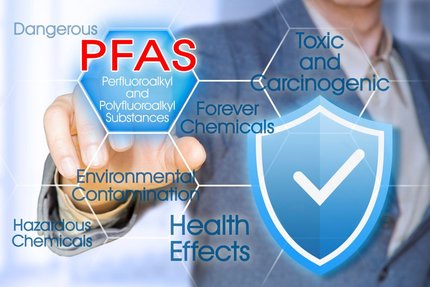
Per- and polyfluoroalkyl substances (PFAS) are usually referred to as “forever chemicals” because they persist in the environment. These synthetic chemicals contain carbon-fluorine bonds, which are responsible for their water and stain resistance. However, these bonds also make many PFAS highly resistant to degradation.
As PFAS regulation evolves, the proposed EU restriction goes far beyond a small group of well-known compounds. According to the European Chemicals Agency (ECHA), it would cover more than 10,000 substances as a class rather than regulate them one by one. Formulators will need to check the full formulation, including additives and processing aids.
The implication for the coatings industry is that some fluoropolymers, previously regarded as lower-risk materials, may now fall within the proposed restriction framework. That means manufacturers of industrial coatings must review fluorinated surfactants and coating additives. Because of this, many companies are looking for alternative coating materials.
The proposed PFAS restriction continues to move through the European regulatory process under REACH (Registration, Evaluation, Authorisation and Restriction of Chemicals). Authorities from Denmark, Germany, the Netherlands, Norway, and Sweden submitted the Annex XV restriction dossier in 2023. It is one of the broadest chemical restrictions ever considered within the EU.
The process reached several important stages in 2026. In March, ECHA’s Risk Assessment Committee (RAC) adopted its final opinion on PFAS risks. That same month, the Committee for Socio-Economic Analysis (SEAC) published its draft opinion and opened a public consultation, which ended in May.
The SEAC is expected to adopt its final opinion by the end of 2026. The European Commission will then use the opinions from both committees to prepare a formal proposal for a vote by the REACH Committee. The next stage may begin in 2027, but no final adoption date has been confirmed.

There’s an ongoing debate surrounding fluoropolymers and the impact of the proposed restriction. Industry groups, including the Fluoropolymers Product Group within Plastics Europe, argue that these materials should be treated differently from other PFAS. They point to their stability and lower risk of release during normal use and have called for broader or open-ended derogations.
However, environmental organizations, including ChemSe, disagree. They argue that fluoropolymer production, disposal, and degradation can still release PFAS into the environment and that fluoropolymers should remain within the restriction framework.
The proposal recognizes that alternatives are not yet available for every PFAS use. It allows certain uses to continue during transition periods ranging from five to more than 12 years, depending on the application. However, it does not fully exempt fluoropolymers.
Formulators are reviewing their materials before the final rules are adopted to reduce supply chain and compliance risks. This is also increasing demand for PFAS-free coatings.

Fluorinated chemistry plays an important role in the coatings industry. For decades, coating additives containing PFAS have been used to increase stain resistance, provide water and oil repellency, and improve flow and leveling. The proposed restrictions on PFAS have pushed formulators to review every fluorinated component in their formulations, even if the coating has only one fluorinated component. That means manufacturers need to understand how multiple coating chemicals interact throughout the formulation and evaluate whether PFAS-free alternatives can achieve the same performance.

Replacing fluorinated components is not as simple as swapping one ingredient for another. Coating additives serve specific purposes, while PFAS can deliver several benefits at once. No single alternative matches that performance across every application, so some functions are harder to replace:
Water and oil repellency: Fluorinated surfactants and fluoropolymer additives provide high levels of water and oil repellency in industrial coatings. While silicone-based technologies have water repellency, matching oil resistance can be difficult.
Leveling and surface appearance: Surface defects, including poor flow and uneven film formation, can be controlled using fluorinated surfactants.
Anti-blocking and durability: Anti-blocking agents prevent coated surfaces from sticking together during storage, while fluorinated additives can also improve stain resistance and long-term durability.
Several major suppliers have moved away from PFAS additives. Clariant completed its transition to a PFAS-free additive portfolio in December 2023, while BYK Additives and Micro Powders announced that they would stop supplying PFAS-containing products by the end of 2025. Sourcing alternative coating chemicals early can reduce disruption and avoid rushed reformulation when new regulations take effect.
Although the EU restriction receives the greatest attention, PFAS regulation is expanding worldwide. In the United States, the EPA has established PFAS reporting requirements for manufacturers and importers, but the implementation timetable is being revised. Several states, including Minnesota, Maine, New York, Vermont, and Washington, have also adopted their own PFAS restrictions.
Manufacturers exporting industrial coatings beyond Central and Eastern Europe should monitor multiple jurisdictions rather than focusing solely on EU legislation. Developing PFAS-free coatings may reduce exposure to certain restrictions, but compliance must still be assessed for each market and application.

While several aspects of the restrictions are under discussion, preparation is already underway.
Some steps formulators should take include:
Auditing formulations to identify fluorinated coating additives and specialty coating chemicals.
Engaging suppliers regarding alternative coating materials and long-term product roadmaps.
Requalifying formulations instead of assuming replacements will offer equivalent performance.
Monitoring evolving exceptions and implementation timelines that may affect individual applications.
Evaluating alternatives requires dependable technical and distribution support. During the PFAS transition, HSH Chemie helps coatings manufacturers compare and source raw materials as regulations and product availability change. HSH Chemie’s coating materials and additives portfolio includes spectrum binders, organic pigments, waxes, and other products for industrial coatings. HSH Chemie also offers technical guidance and laboratory support during material selection and formulation testing.
For more than 30 years, we have supported coating chemicals manufacturers and suppliers throughout Central and Eastern Europe. Our local market knowledge and established distribution network help customers maintain reliable sourcing during reformulation and shifts in supply.
Explore our coatings chemicals portfolio and discover how HSH Chemie can support your next project. We also provide suppliers with access to coatings’ markets across the region. Further information on coating materials and coating additives is also available from our technical team.
If you enjoyed reading this article and you would like to read more of our HSH Stories and/or Industry News articles, please visit our website.