
Hair dye ingredients are facing more regulatory scrutiny across Europe than at any point in recent memory. With the SCCS flagging established dyes and resorcinol under growing consumer and regulatory pressure, manufacturers are already reformulating. This article looks at what is changing and how HSH Chemie, together with its partner Cosmolife, is helping hair colour manufacturers respond.
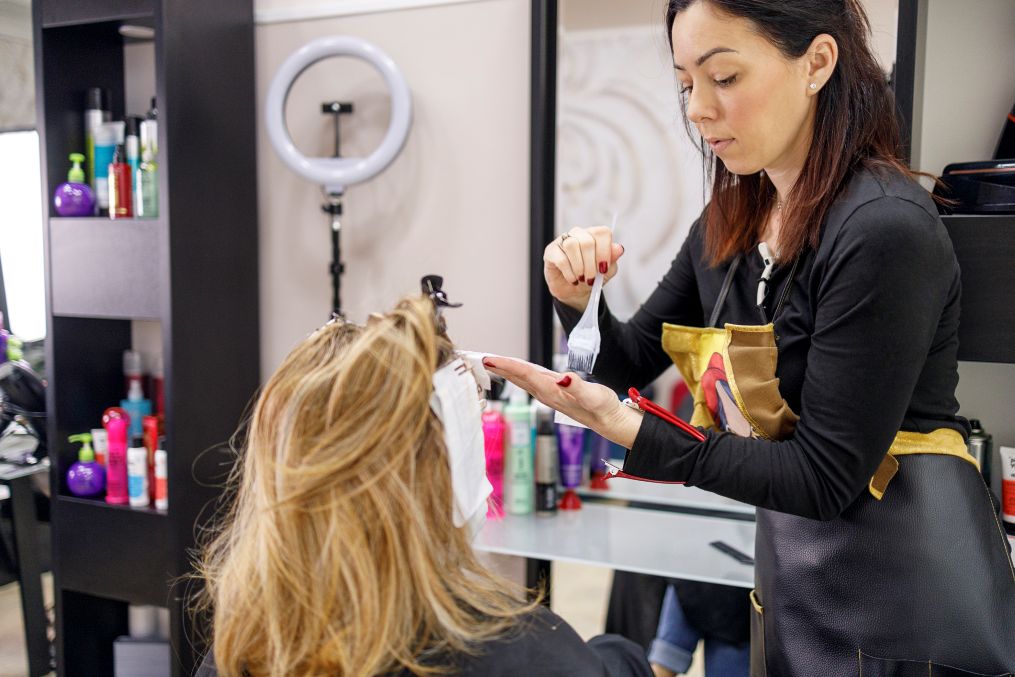
Hair dye formulations are under increasing scrutiny as EU regulations on key ingredients tighten.
Under the EU Cosmetics Regulation, bringing a new hair dye ingredient to market means clearing a defined regulatory sequence. That starts with a safety dossier, continues with a scientific review from the SCCS (Scientific Committee on Consumer Safety), and ends with a final decision from the European Commission. That decision determines whether the ingredient earns a spot in Annex III, with binding limits on concentration, product type, pH and use.
New toxicological data, tighter scrutiny of impurities and nitrosamine precursors, and consumers reading ingredient lists more closely — all of it is pushing hair colour formulation toward safer chemistry and faster reformulation cycles. Two topics are currently driving that shift under EU hair dye regulation: resorcinol, long used as a coupler in oxidative hair dye, and the basic dyes used in semi-permanent colour.

For decades, formulators have reached for resorcinol as their go-to coupler, prized for vivid brilliance, warm reds and browns, real depth, and even colour development. But its toxicological profile is under scrutiny, and shoppers are scanning ingredient panels more closely. Anything resembling resorcinol, including its chemical relatives, now tends to make a product a harder sell.
That leaves formulators with two practical hair dye alternatives. The first stays close to familiar chemistry. 2-Methylresorcinol (2-MR) couples efficiently in warm red and mahogany directions, though it loses punch in bold reds and oxidises more easily. 4-Chlororesorcinol (4-CLR) holds warm tones with real staying power, though results can drift muddier without careful dosing.
The second route steps away from the resorcinol name altogether. HMDA (Hydroxyethyl-3,4-Methylenedioxyaniline HCl) suits natural, beige and warm-brown results, delivering strong brilliance and grey coverage; while pairing well with other hair colour ingredients.
HBM (Hydroxybenzomorpholine) leans toward neutral, deep and chocolate territory, holding stability without pulling the shade warm or cool. Neither drops in as a straight 1:1 swap; both pair with primary intermediates like PPD, PAP or TDS, and sometimes extra couplers, to land on the target shade. These pairings show how hair dye alternatives still rely on multiple hair dye ingredients working together, not a single substitute.
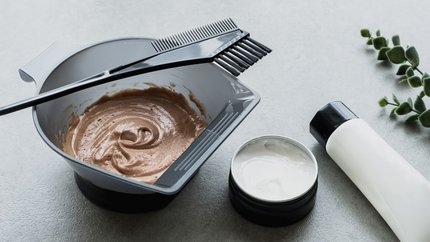
The SCCS does not consider Basic Blue 99 safe for non-oxidative use, citing potential genotoxicity, and the same holds for Basic Brown 16, flagged for mutagenicity. Neither dye is banned outright today; a formal Annex II prohibition would require a separate European Commission decision. But both are already high-priority reformulation topics under EU hair dye regulation, and manufacturers who wait for a final ruling before acting will be starting from behind.
Neither dye swaps for a single alternative. Basic Blue 99 is hard to reproduce because it was never one dye to begin with. It's an engineered mix of cationic dyes, giving it a broad blue tone, strong hair affinity, multi-site deposition, and lasting wash resistance. No single dye replicates that profile, so the better path in hair colour formulation is to rebuild it from three complementary pieces. These include Basic Blue 124 to carry the colour's underlying weight, HC Blue 16 to lift clarity and shine, and a violet corrector, such as Basic Violet 2 or Acid Violet 43, to cancel unwanted warmth. Balanced well, this trio produces natural, cool and violet-leaning shades with lasting depth.
Basic Brown 16 poses a different puzzle; rather than behaving like a single-tone dye, it already carries yellow, red and blue, which is why it reads as a convincing, ready-made brown on its own. Recreating that means dialing in the same balance: more yellow and less blue for light, warm browns; an even mix of yellow and red with moderate blue for medium tones; and more blue and red with less yellow for dark shades. Ash and cool-leaning browns need a different fix, adding HC Blue 16 or a violet corrector to cool the tone rather than shifting the ratio. Golden shades call for extra yellow; chocolate or reddish browns need more red.
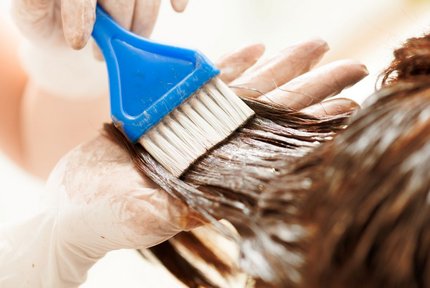
Reformulation success depends on understanding why the original dye performed the way it did. Then choosing hair dye ingredients that recreate that performance rather than a shortcut substitute. Through its partnership with Cosmolife, HSH Chemie gives hair colour manufacturers direct access to the cosmetic raw materials this work requires.
These include acid dyes for building vibrant colour, cationic (basic) dyes suited to semi-permanent formulas, and HC nitro colours for punchy, high-impact shades. The range also covers the oxidation bases and couplers that make up its hair dye intermediates for permanent and demi-permanent work. Cosmolife's range extends further into water- and oil-soluble dyes, pigments and lakes for the wider personal care market.
For manufacturers preparing for the next phase of EU hair dye regulation, HSH Chemie offers more than raw material supply. Our team helps customers identify the cosmetic raw materials, hair dye intermediates and hair colour ingredients that fit their target shade and regulatory timeline. This turns a compliance deadline into a chance to differentiate rather than a scramble to catch up.
Explore HSH Chemie's cosmetic raw materials portfolio, including Cosmolife's hair colour systems, and contact our team to discuss reformulation concepts for resorcinol, Basic Blue 99 or Basic Brown 16.
Interested in reading more of our articles? If so, check out our HSH Stories and/or Industry News articles on our website.