
From clockmaking in Hamburg to becoming a leader in chemical distribution in Central and Eastern Europe, the Rather family’s journey is a story of craftsmanship, adaptability, and entrepreneurship. Discover how values forged in a small clock shop continue to shape HSH Chemie and its approach to chemical distribution today.
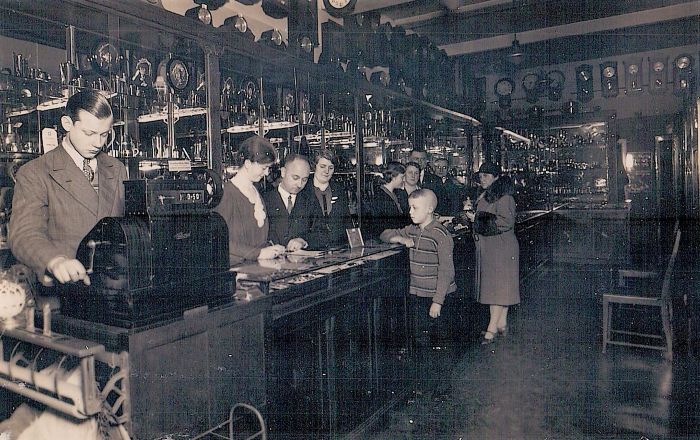
Friedrich Wilhelm Rather at the cash register of the family clock shop in Harburg.
Patience, focus on detail and craftsmanship once defined the daily work of the Rather family. Long before HSH Chemie became a recognized name in chemical distribution across Central and Eastern Europe, these principles shaped a family business rooted in German clockmaking.
This journey began in Harburg, a former Prussian town, now known as a district of Hamburg. Historically shaped by industry and trade, it was an area that required adaptability and business awareness; qualities that would later become essential in the world of chemical wholesale distributors.
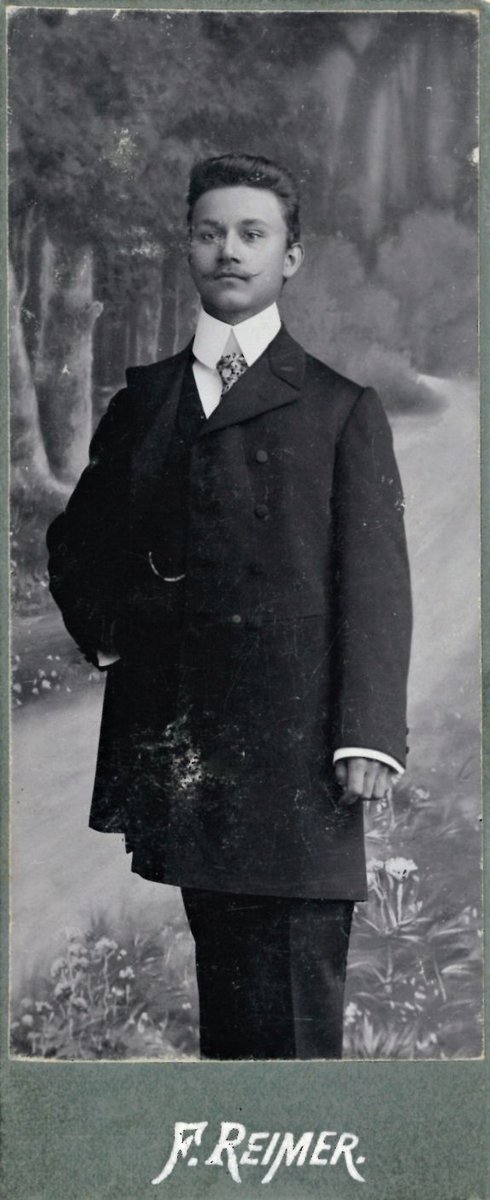
Friedrich August Rather (1884-1965), a trained clockmaker from a farming family in Westphalia, moved to Harburg in 1905. At the time, Harburg was growing into an attractive place for trade and industry, with factories drawing large numbers of workers into the area.
He first worked as an employee at the clock shop Winkelmann & Nass. After Mr. Winkelmann passed away and his widow had no successor for the business, Friedrich August Rather was given the opportunity to buy the shop. This marked the beginning of the Rather family’s clock shop era.
The clock shop that was taken over by Friedrich August Rather marked the family’s first entrepreneurial venture. This step into business ownership set the tone for the family's approach to trade in the decades that followed.
Operating in early 20th-century Germany, the shop faced some of the most challenging periods in modern history. World War I, the inflation of 1921, the stock market crash of 1928, the Great Depression, and the years surrounding WWII tested economic stability. Continuing through such times required flexibility and a commitment to quality. At the end of World War II, the shop lay in chaos after bomb raids on Hamburg.
In the immediate post-war years, watches and clocks were not only practical objects, but also valuable possessions and visible status symbols. Cigarettes often served as a black-market currency, and family memories from this time reflect how watches could be traded, taken, or used as bargaining goods in a society where money had lost much of its stability.
Rebuilding the shop meant working through scarcity, uncertainty, and a market in which many people simply had no money to spend. One person alone could not run such a business; it required a team and a strong belief that customers would return when life became more stable.
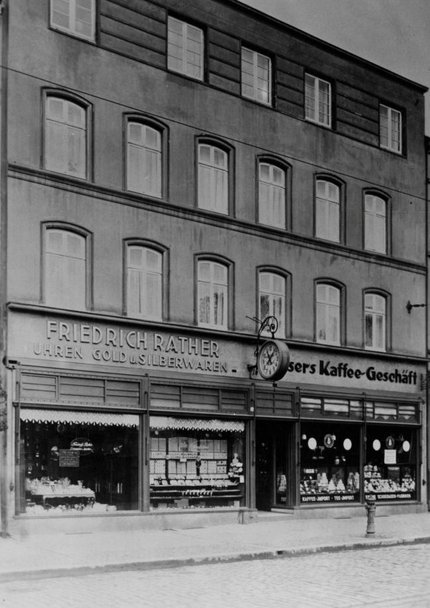
Beyond clocks, the shop also offered finely crafted goods such as jewelry and cutlery. This broader assortment reflected the family’s understanding of craftsmanship and customer needs. Interestingly, these products were not aimed at wealthy customers; they served regular working people in Harburg who were looking for reliable goods.
Running such a business required more than technical knowledge; it demanded reliability and strong customer relationships. These principles later became defining characteristics of the family’s transition into a respected chemical trading company, and they still influence HSH Chemie’s approach to chemical distribution today.
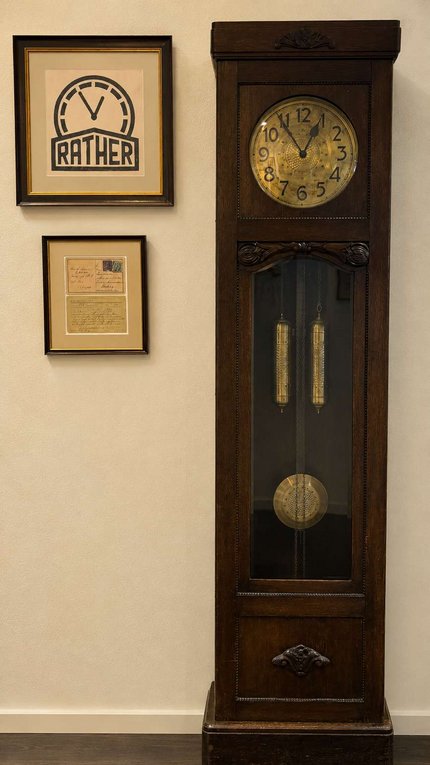
The family’s business development did not move from clocks to chemicals overnight. For many years, the future still seemed firmly connected to the clock shop. Friedrich Wilhelm Rather (1916-2011), one of Friedrich August Rather’s two sons, had been prepared to continue the business together with his brother Harald, making it a true "Rather & Sons" undertaking.
During World War II the shop was destroyed. It was rebuilt and led by Friedrich Wilhelm Rather and Harald Rather, even as the future of traditional clockmaking became increasingly uncertain.
After World War II in 1945, Friedrich Wilhelm’s hands were no longer steady enough for the fine mechanical work of clock repair, making it increasingly difficult for him to continue the craft as before. As a result, he turned toward sales, marking the beginning of the family’s gradual shift from traditional craftsmanship to commercial activities. His son, Friedrich August Rather (born 1950), would later follow in his footsteps. After a successful apprenticeship at Nordmann, Rassmann & Co., a well-respected Hamburg trading company, he took this commercial path into the chemical business.
A key turning point came with Friedrich August Rather, whose first steps into the world of chemicals helped open a new path beyond the traditional clock shop business. With his entrepreneurial drive, he laid the foundation for later success. His legacy is carried forward by the next generation, including Stefan Friedrich Rather, who further developed the family’s business activities, while Nina Hack (born Rather) remains involved as a shareholder of HSH Chemie GmbH.
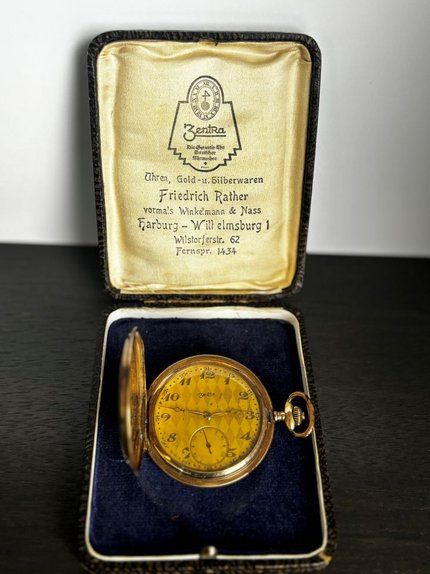
At first glance, the transition from clockmaking to chemical distribution may seem unexpected. Yet the underlying logic remained consistent: both fields depend on accuracy, long-term business relationships and commercial skills.
The clock shop had survived two world wars, inflation, economic hardship, and the painful years that followed. But in the end, it was new technology and changing customer behavior that made the old business model obsolete.
Originally, Friedrich August Rather was expected to begin a career connected to clockmaking. But as the traditional clock shop business became less secure, a different path opened unexpectedly. When a planned apprenticeship with another clockmaking shop fell through, he went with his father directly to the Chamber of Commerce to ask which opportunities were still available. This led him to an apprenticeship in 1966 with Nordmann, Rassmann & Co., a company active in the chemical trade. (He became friends with the owner of Nordmann, Rassmann & Co., Edgar E. Nordmann, and the two remained friends until Edgar passed away a few years ago.)
What began as the only available opportunity soon became the foundation for a new professional direction. Through his work at Nordmann, Rassmann & Co., Friedrich August Rather entered the chemical business, connecting the family’s commercial experience with raw materials, suppliers, and industrial customers.
Friedrich August Rather continued working in the business world as a salesman, helping the family expand its experience beyond craftsmanship into commercial trade.
His skills developed through clockmaking carried over seamlessly into the chemical sector. Precision became quality assurance, customer care evolved into lasting cooperation, and craftsmanship transformed into technical expertise. These principles would later form the backbone of strategic business partnerships within the chemical industry.

As the family moved away from clockmaking, new opportunities emerged in wholesale and distribution. Early involvement in chemical trading introduced a business environment shaped by international markets, technical materials, and long-term supplier partnerships.
With a clear business vision, Friedrich August Rather saw the opportunities created by the collapse of communism and built a chemical trading company for Central and Eastern Europe. Poland became the first important foothold in the region, marking the beginning of a business model built on local presence, supplier trust, and close customer relationships.
The establishment of F. Rather Chemie GmbH in 1976 represented a decisive step toward formalized operations as a chemical trading company. Like the clock shop before in Harburg, the company combined business independence with structured trading activities.
This phase created the organizational foundation for what would later become HSH Chemie, one of the leading chemical wholesale distributors in Europe.
The journey from clocks to chemicals reflects continuity rather than disruption. Across generations, the Rather family transferred craftsmanship, quality awareness, and adaptability from one industry to the next. Each step was guided by the ability to recognize changing market needs, while remaining firmly anchored in long-held values.
Today, HSH Chemie stands as the number one chemical distributor in Central and Eastern Europe, operating across numerous countries while remaining 100% family-owned. The chemical wholesale distributor continues to play a key role in international markets.
HSH Chemie continues to emphasize sustainable growth and long-term collaboration through strategic business partnerships with suppliers and customers alike.
Cohesion, loyalty, and reliability still define how HSH Chemie operates – principles first established in a modest clock workshop and guiding its approach to reliable chemical distribution today.
In the next article of this series, we will take a closer look at Friedrich August Rather (the founder of HSH Chemie GmbH): who he is, and how he helped shape the transition from F. Rather Chemie GmbH to the early beginnings of HSH Chemie GmbH. Stay tuned!